How to Achieve a Compliant Zero-Threshold Shower (NCC 2022 Guide)
If you’re aiming to deliver a true zero-threshold shower, compliance isn’t just about removing the step — it’s about getting the entire system right. From substrate set-downs and waterproofing integration to precise floor falls and drainage performance, every detail plays a role in meeting the requirements of NCC 2022 and AS 3740. Done properly, a zero-threshold shower creates a seamless, accessible transition while still controlling water effectively. This article breaks down the key technical considerations including minimum fall requirements, correct drain placement, and how to select a drainage solution that can handle both surface intake and internal channel flow. It also explores common design mistakes — like inadequate set-downs or undersized outlets — that can lead to non-compliance or water ingress issues. Whether you’re a builder, designer, or plumber, this guide will give you a clear, practical framework to achieve a compliant, high-performance zero-threshold shower without compromise.
4/10/20263 min read
Zero-threshold showers have quickly become a defining feature of modern bathroom design. Clean lines, seamless transitions, and improved accessibility are driving demand across both residential and multi-residential projects.
However, achieving a true step-free shower that performs—and remains compliant—is far from straightforward.
With the introduction of NCC 2022 and the Livable Housing Design requirements, builders, designers, and plumbers are now expected to deliver accessible bathrooms without compromising waterproofing performance. This creates a critical challenge: how do you contain water without a physical hob or step?
Understanding the Compliance Requirements
Under NCC 2022, step-free access into showers is a key requirement for improved livability and accessibility. This means:
No vertical step-down into the shower area
Smooth transition from bathroom floor to shower
Effective water containment within a flat floor plane
While the intent is clear, the execution often isn’t.
Without a hob, water is no longer physically restrained. Instead, compliance relies on:
Correct floor gradients
Precise drain placement
High-capacity drainage systems
Waterproofing integrity
This is where many projects fall short.
Why Traditional Drainage Methods Fail
Standard centre wastes were never designed for zero-threshold applications.
Common issues include:
Inadequate falls across large format tiles
Water tracking beyond the shower area
Ponding due to poor substrate preparation
Inefficient water capture under high flow
In a step-free environment, these issues are amplified. Even minor installation inconsistencies can result in water escaping the shower zone.
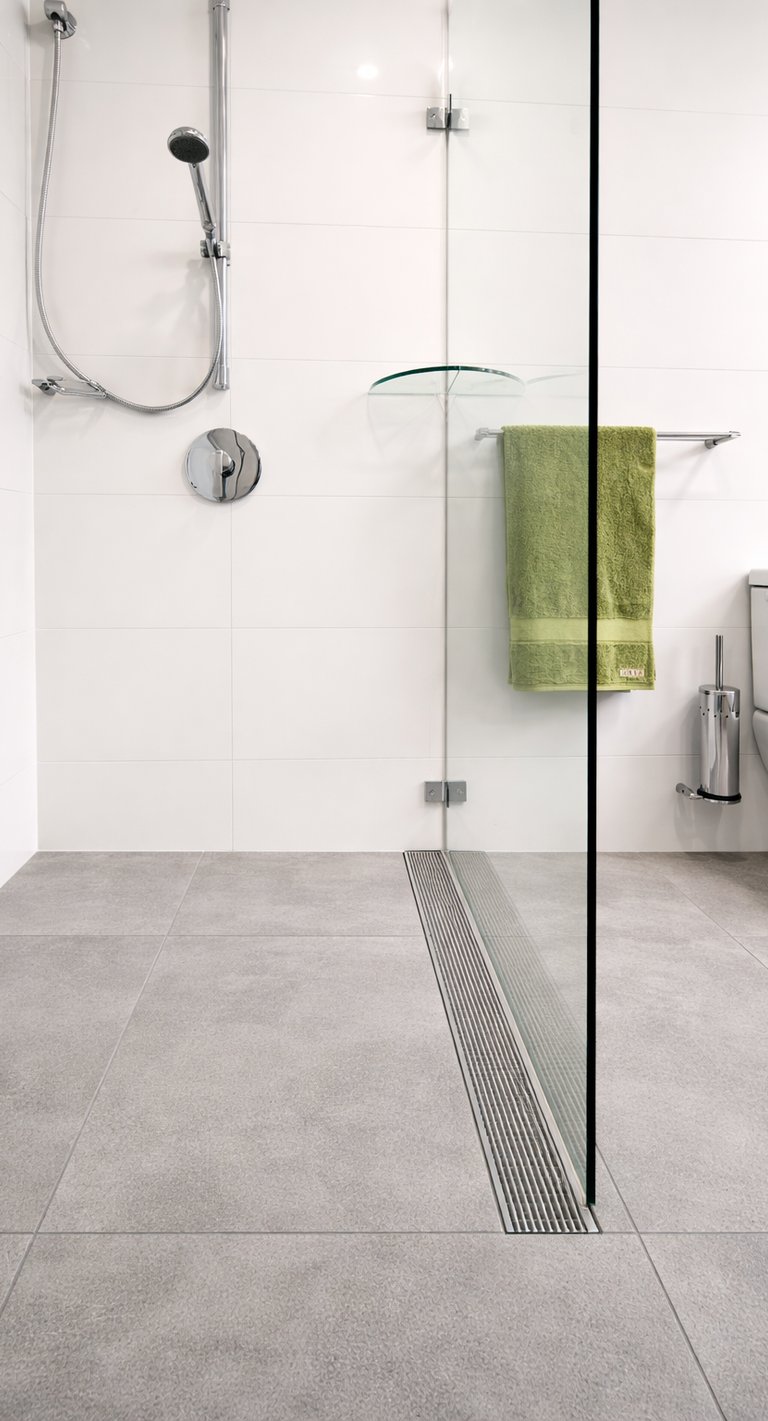
The Role of Linear Drainage in Zero-Threshold Showers
Linear drainage is the most effective solution for achieving compliant zero-threshold designs.
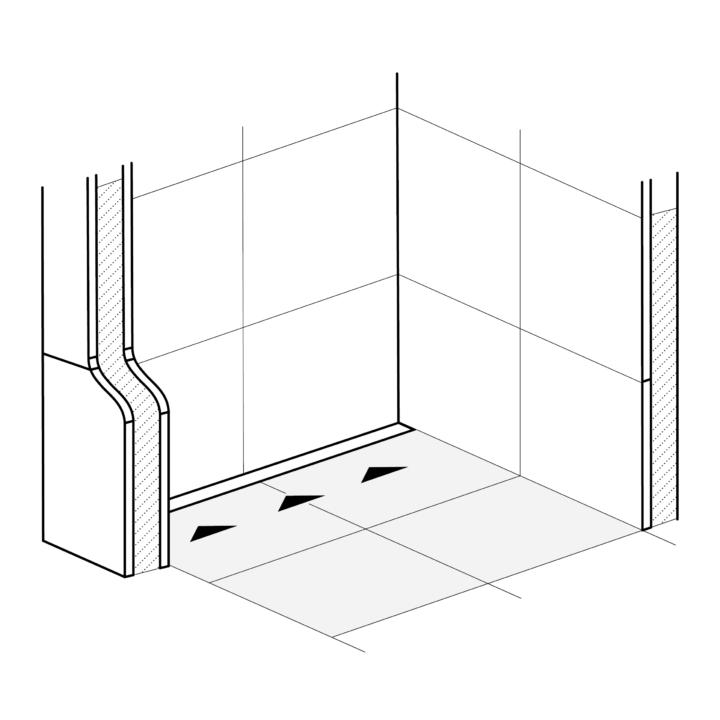
Positioned correctly, a linear drain allows the floor to fall in a single direction, simplifying installation and significantly improving performance.
Key advantages include:
1. Controlled Water Capture
A continuous inlet captures water along the entire length of the shower, reducing the risk of overflow.
2. Simplified Falls
Single-direction falls eliminate the complexity of screeding to a central point—especially important with large format tiles.
3. Seamless Integration
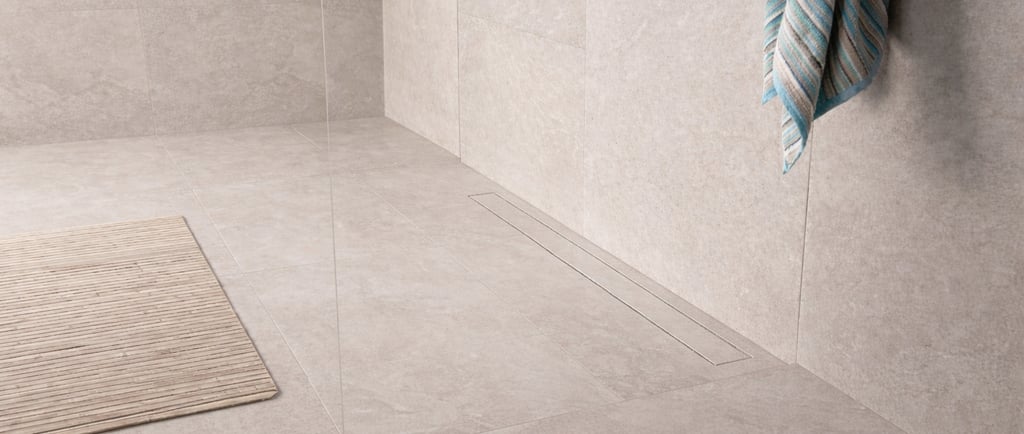
Linear drains allow tiles to run uninterrupted into the shower area, maintaining a clean architectural finish.
4. Improved Accessibility
Flush installation supports true step-free access without trip hazards or level changes.
Correct Drain Placement Is Critical
Even with the right product, poor placement will compromise performance.
Best practice positioning includes:
At the rear wall of the shower
Allows the entire floor to fall away from the bathroom entryAt the shower entry (threshold position)
Acts as a barrier to prevent water escaping into the main bathroom
Each approach has its place depending on layout, but both require:
Accurate set-downs
Correct falls (typically 1:80 to 1:100)
Coordination with waterproofing
Waterproofing & Falls – The Non-Negotiables
No drainage solution will compensate for poor preparation.
To achieve compliance:
Substrate must be correctly graded before waterproofing
Waterproofing must be continuous and properly bonded to the drain system
No back-falls or flat spots should exist
Failure in any of these areas leads to long-term issues—regardless of the drain specified
Grate Selection Matters More Than You Think
Not all grates perform equally in zero-threshold environments.
For high-performance applications:
Tile insert grates offer a seamless look but rely heavily on correct falls
Wedge wire grates provide superior intake capacity and faster surface water removal
In many cases—particularly in larger or open showers—wedge wire offers a more reliable outcome.
Getting It Right First Time
Zero-threshold showers are not forgiving. They demand precision across design, product selection, and installation.
To achieve a compliant and functional result:
Engage drainage early in the design phase
Select systems designed specifically for threshold applications
Ensure coordination between builder, waterproofer, and plumber
Use site-specific solutions where required
Final Word
Zero-threshold design is no longer a niche requirement—it’s becoming the standard.
But compliance isn’t achieved by removing the step alone. It requires a fully integrated drainage strategy that manages water effectively within a flat floor environment.
Done right, it delivers both performance and architectural intent.
Done poorly, it leads to costly failures.