
Linear vs Square Floor Wastes: Which Suits Your Bathroom Layout?
Choosing between linear and square floor wastes? Compare style, flow rate, and installation to find the right stainless steel drain for your bathroom
BATHROOM DRAINS
7/14/202613 min read


You are standing in a tile showroom, surrounded by samples, and the salesperson asks a question you did not expect: "What type of floor waste are you going with?" For most Australian renovators, the answer splits into two camps. There is the sleek, elongated strip that whispers modern luxury, and there is the familiar, compact grate that has been quietly doing its job for decades. The choice between a linear floor waste and a square floor waste is not just about looks. It shapes how your tilers screed the floor, how your waterproofing membrane is installed, and how often you will be on your knees fishing hair out of a pipe. This guide walks you through every practical consideration so you can walk back into that showroom with a decision already made.
Understanding the Two Contenders: Linear vs. Square Floor Wastes
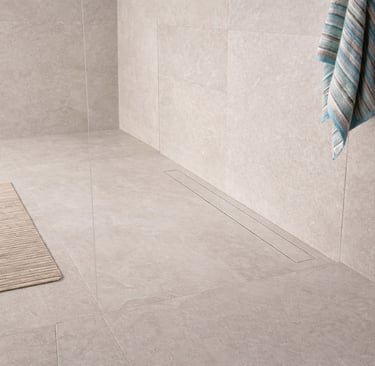
A linear floor waste, often called a strip drain, is a long, narrow channel that sits flush with the shower floor. These units typically run between 600mm and 1200mm in length and are designed to collect water along a single plane. You will most often see them positioned against the back wall of a shower or across the threshold where the shower meets the bathroom floor. The water hits the tiles, flows in one direction, and disappears into the channel.
A square floor waste is the traditional point drain. It is compact, usually measuring 100mm by 100mm or 150mm by 150mm, and it collects water from all four sides. The tiler creates a subtle inverted pyramid in the floor screed, sloping each quadrant toward the central grate. This is the style found in most Australian bathrooms built before 2015, and it remains the default choice for budget-conscious renovations.

Material quality matters regardless of which shape you choose. In coastal suburbs from the Gold Coast to Geelong, the salt-laden air demands corrosion resistance. Premium Australian suppliers like Neston manufacture their floor wastes from 316 grade stainless steel, which is the benchmark for marine and high-moisture environments. Cheaper 304 stainless or chrome-plated plastic units will fail faster, especially in bathrooms with poor ventilation.
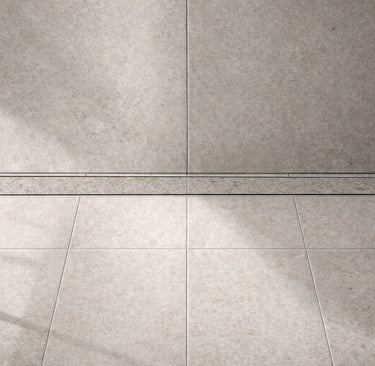
A third category worth noting is the tile insert variant. Available in both linear and square formats, these wastes feature a recessed tray that accepts a piece of your actual floor tile. Once fitted, the drain becomes nearly invisible, with only a thin shadow line revealing its presence. Highgrove Bathrooms and Beaumont Tiles stock extensive ranges of these, and they have become a signature detail in high-end Australian renovations. The trade-off is complexity: the tile piece must be cut precisely, and the tray depth must match your tile thickness exactly.
The fundamental technical difference between the two shapes comes down to how water travels across the floor. A linear drain requires a single-direction fall, meaning the entire shower floor slopes in one plane toward the channel. A square drain requires a four-direction fall, with the screed sloping inward from each corner. This distinction has cascading effects on tiling, waterproofing, and cost.
Aesthetic Impact: Which Drain Complements Your Tiling?
The tile you choose often dictates the drain you should choose. Large-format tiles, those measuring 600x600mm or the increasingly popular 600x1200mm planks, pair naturally with a linear floor waste. When you place a long strip drain along the shower wall, the tiles can run uninterrupted from the opposite wall straight into the channel. There is no need to cut tiles into four triangular quadrants, which would break the clean lines of a large-format layout. The result is a wet-room aesthetic that feels expansive and contemporary.
Square drains work best with smaller tiles. If you are laying 100x100mm mosaics or a classic penny-round pattern, a central square grate can be framed within the grout lines and almost disappear. The four-way fall pattern is less visually disruptive when the tile itself is already broken into small segments. In a heritage-style bathroom with tessellated tiles, a square floor waste feels authentic and period-appropriate.
Tile insert options push the seamless look even further. Neston's tile insert wastes are designed to blend into the floor. A linear tile insert running along the shower wall creates the illusion that the floor simply meets the wall with no drain at all. A square tile insert in the centre of a mosaic floor becomes part of the pattern. The catch is precision: the tiler must cut the insert tile to fit the tray exactly, and the tile thickness must be consistent with the surrounding floor. The Neston Linear Tile Insert accepts up to a 10mm floor tile thickness across the range, the Neston Square Tile Insert Waste accommodates tiles up to 10mm thick, while the Neston Max Square Tile Insert Waste is built for larger-format tiles, accepting up to 20mm. Getting this match right — tray depth to tile thickness — is what determines whether the drain sits flush or proud of the floor.
Colour and finish trends for 2026 reflect a market that treats floor wastes as design elements rather than purely functional hardware. Neston offers its range across brushed stainless steel, black, brushed brass, brushed bronze, and gun metal. Brushed stainless steel remains the versatile, budget-friendly standard, suited to almost any bathroom style. Black and gun metal have become the go-to choice for contemporary bathrooms where tapware and shower fittings share the same dark, matte finish. Brushed brass and brushed bronze bring warmth to the space and pair well with timber vanities and warmer stone tones, without the high-maintenance shine of polished metal finishes.
There is also a practical aesthetic rule to follow. If your shower drain is positioned in the centre of the floor, a square grate is often the only logical choice. A linear drain in the middle of a room looks awkward and creates trip hazards. If the waste pipe is located along a wall, a linear strip is the more natural fit. Let the plumbing rough-in guide the shape, and let the shape guide the tile selection.

Installation Complexity and Waterproofing: AS/NZS 3500 Compliance
This is the section that most Australian e-commerce sites skip, and it is the one that matters most if your renovation is not going to leak through the ceiling below. Every bathroom floor waste in Australia must comply with AS/NZS 3500.2, the plumbing and drainage standard that governs sanitary plumbing. The National Construction Code references this standard, and your plumber and waterproofer are legally required to meet it.
A square drain installation demands what tilers call a four-point fall. The screed must slope from each corner of the shower toward the central grate at a minimum gradient of 2 percent, or roughly 20mm of fall per metre. This is more complex to execute than it sounds. The tiler must cut triangular sections of tile that meet cleanly at the grate, and the grout lines must align across all four quadrants. When done well, the result is barely noticeable. When done poorly, you get lippage, uneven grout lines, and puddles that sit in the corners.
A linear drain simplifies the screed work. The entire floor slopes in a single direction, which is easier for tilers to get right. The tiles can be laid as full pieces without complex cuts. However, the drain channel itself is more demanding to install. Most linear drains require a bonding flange that integrates with the waterproofing membrane. The membrane must extend into the drain body and be clamped or sealed to create a continuous watertight barrier. This is not a detail you can afford to get wrong. A failed bond between the membrane and the drain flange is one of the most common sources of shower leaks in Australian bathrooms.
Both drain types must incorporate a water trap with a minimum 50mm water seal. This is a non-negotiable requirement under the plumbing code, designed to prevent sewer gases from entering the bathroom. Linear drains often come with a built-in trap integrated into the channel body. Square drains may require a separate P-trap installed below the floor, which means access for maintenance must be considered.. Cutting a long channel for a linear drain trap is more invasive and may require engineering advice if the slab is post-tensioned.
For retrofits, plumbers tend to prefer square drains. The existing waste pipe is usually positioned for a central point drain, and a square grate drops into the same opening with minimal modification. Converting a square drain to a linear drain in an existing bathroom is a major job. It requires re-screeding the entire shower floor, extending the waterproofing, and possibly relocating the waste pipe. Budget for an extra two to three days of labour and a few hundred dollars in additional materials.
Drainage Performance and Flow Rates
A shower drain can look beautiful and still fail at its primary job: getting water off the floor before it pools around your feet. The surface area of the grate is the biggest factor in drainage speed, and linear drains have a clear advantage here. A 900mm linear channel presents far more open area for water to enter than a 100mm square grate. While no Australian retailer publishes exact flow rates on their product pages, industry testing generally shows that a standard linear drain can handle between 30 and 50 litres per minute, while a square point drain manages around 15 to 25 litres per minute.
For most households, this performance gap is academic. A standard hand-held shower head delivers about 9 litres per minute, well within the capacity of either drain type. The difference becomes real when you install a large rain shower head measuring 300mm or more in diameter, or when you run multiple shower outlets simultaneously. In a double shower with two rain heads and body jets, a square drain may struggle to keep up, and water will spread beyond the shower zone. A linear drain positioned at the shower entry acts as a cutoff point, catching water before it reaches the bathroom floor.
Hair and debris management is where the two designs diverge sharply. A square grate typically has a pattern of small holes or slots. Hair collects on top of the grate and wraps around the central strainer underneath. Once the strainer is clogged, water backs up quickly. Cleaning requires lifting the grate, pulling out the mat of hair, and often using a drain snake to clear the pipe below.
Linear grates have wider slots that allow water through while trapping hair on the surface. Many models include a removable hair catcher or collection bucket that sits inside the channel. You lift the grate, lift out the bucket, tip the hair into the bin, and replace it. This takes less than a minute and requires no tools. Tradelink offers a plastic grate with fins that works on a similar principle: the fins direct water into the channel while catching hair on top, where it can be wiped away. For family bathrooms where long hair is a constant battle, this ease of maintenance is a genuine quality-of-life improvement.
Some linear drains are marketed as self-cleaning, but the term is optimistic. What they actually offer is a design where water flow carries debris toward the waste outlet rather than letting it settle in the channel. You will still need to clean the grate and trap regularly, but the frequency may be lower than with a square drain
Cost Comparison: What You Will Actually Pay in 2026
The price of the drain itself is only part of the story. Installation labour, waterproofing materials, and tiling complexity all add to the final bill, and these costs differ significantly between linear and square options.
At the entry level, a basic square floor waste is hard to beat. A basic stainless steel square floor waste from Neston is $65 — a well-made, widely trusted product that does the job without pretension.
Entry-level linear drains start a little higher. A standard stainless steel tile insert grate, 800mm kit, is $269 from Neston, reflecting the longer channel and more complex manufacturing process, and buys you a distinctly more contemporary look. Longer tile-insert linear channels command a further premium, while premium, design-led square tile inserts sit at the top of the range.
The hidden costs sit in the installation. A square drain in a standard 900x900mm shower is quick to install. The plumber connects the waste to the existing pipe, the waterproofer seals around the flange, and the tiler cuts four triangles. Labour costs are predictable and contained.
A linear drain requires more preparation. The screed must be laid with a single-direction fall, which may mean building up one side of the shower floor more than the other. The waterproofing membrane must extend further and bond to a larger flange. If the drain is positioned at the shower entry, the tiler may need to create a subtle ramp or threshold. These steps typically add a modest amount to installation labour compared to a square drain. In a bathroom renovation with a total budget of $15,000 to $25,000, this is a modest premium. In a budget refresh under $10,000, it may push the project over the line.
For a budget-conscious renovation, a square grate remains the most cost-effective path. For a luxury wet room where the drain is a visible design feature, a linear drain justifies its premium with better aesthetics, easier maintenance, and higher flow capacity.
Maintenance and Cleaning: Keeping Your Drain Hair-Free
Every bathroom drain collects hair. The question is how hard it is to remove.
Square drains are small and the grates are light. You can lift one out with a fingertip. Hair wraps tightly around the components underneath, and removing it usually involves pulling it free by hand and then giving the drain a quick scrub with an old toothbrush. A monthly soak in white vinegar helps dissolve soap scum and mineral buildup, especially in hard-water areas like Adelaide and Perth.
A word of caution on finishes: vinegar and other acidic or abrasive cleaning products should never be used on drains with a PVD coating — including black, gunmetal, brass, and bronze finishes. The acid will strip or dull the coating over time, leaving patchy discolouration that cannot be repaired. For PVD-coated drains, stick to warm water, a mild pH-neutral soap, and a soft cloth.
Linear drains have longer, heavier grates. A 900mm stainless steel grate has noticeable weight, and you will need both hands to lift it. Many premium models feature hinged or magnetic grates that make access easier. Once the grate is off, the channel is open and easy to inspect. You lift out the insert, dispose of the hair, and rinse the channel with hot water. The entire process is faster and less unpleasant than dealing with a clogged square drain.
Tile insert drains are the most demanding to maintain. The tile piece sits flush in its tray and must be lifted out to access the drain below. The tile is bonded into the tray, making the assembly heavy and fragile. If you drop it, the tile can crack, and finding a matching replacement tile months after the renovation is difficult. These drains are best suited to low-hair households, such as couples without children or guest bathrooms that see infrequent use.
How to Choose: A Decision Framework for Your Bathroom
The right drain for your bathroom depends on the specific constraints of your space. Here is a framework based on common Australian renovation scenarios.
Scenario A: Small ensuite with a 900x900mm shower. The floor area is tight, and a central waste pipe is almost certainly already in place. A square floor waste is the simplest, cheapest, and most space-appropriate choice. A linear drain would dominate the floor and look out of proportion.
Scenario B: Large open wet room with no shower screen. Water needs to be contained before it spreads across the bathroom. A linear floor waste positioned at the room entry acts as a water stop. The entire floor slopes gently toward the channel, and water is captured before it reaches the vanity or toilet area.
Scenario C: Large-format tiles measuring 600x1200mm. Cutting these tiles into four triangular quadrants around a central square drain is difficult and often looks messy. A linear floor waste along one wall allows the tiles to be laid as full pieces with a single-direction slope. The result is cleaner and faster to install.
Scenario D: Mosaic tiles or a heritage tessellated pattern. A square floor waste can be centred within the pattern and framed by the grout lines. The four-way fall is less noticeable when the floor is already divided into small segments. This combination suits period homes in suburbs like Paddington, Carlton, or North Adelaide.
Scenario E: High-traffic family bathroom used by multiple people with long hair. A linear floor waste with a removable hair catcher will save you hours of maintenance over the life of the bathroom. The wider slots and accessible channel make cleaning a quick job rather than a plumbing callout.
Before you make a final decision, work through this checklist. Measure your shower floor dimensions and note the position of the existing waste pipe. Decide on your tile size and pattern, because the tile dictates the drain more than the other way around. Confirm your waterproofing plan with your builder or waterproofer, and make sure the drain you choose has a compatible bonding flange. Check that the trap is accessible for maintenance, especially if you are on a concrete slab. Finally, choose a finish that matches or complements your tapware. Consistency in metal finishes is one of the details that separates a professional renovation from an amateur one.
Frequently Asked Questions
What is the difference between a linear and square floor waste?
A linear floor waste is a long, narrow channel that collects water along a single plane, usually positioned against a wall. A square floor waste is a compact point drain that collects water from four directions, typically centred in the shower floor. The two types differ in shape, the direction of the floor slope required, their visual impact, and their drainage flow rates.
What size floor waste do I need for a shower?
For a standard shower up to 1200x1200mm, a 100mm or 150mm square floor waste is generally sufficient. For larger showers, walk-in showers, or wet rooms, a linear floor waste between 600mm and 900mm provides better water capture and faster drainage. Match the drain length to the width of the shower opening where possible.
Are tile insert floor wastes better than standard grates?
Tile insert wastes offer a seamless look by hiding the drain beneath a piece of matching floor tile. They are better for aesthetics but worse for maintenance, because the tiled tray is heavy and fragile to lift. They also cost more than standard grates and require precise tile cutting during installation.
What are the Australian standards for bathroom floor wastes?
Bathroom floor wastes in Australia must comply with AS/NZS 3500.2, which requires a minimum 50mm water seal in the trap to prevent sewer gases from entering the room. The floor must have a minimum fall of 2 percent toward the drain, and the waterproofing membrane must be integrated with the drain flange to create a continuous watertight seal. All plumbing work must be carried out by a licensed plumber.
Can I replace a square drain with a linear drain in an existing bathroom?
Yes, but it is a significant renovation. The job requires removing the existing screed, re-screeding the floor with a single-direction fall, extending or replacing the waterproofing membrane, and possibly relocating the waste pipe. This is not a simple swap and should only be undertaken as part of a full bathroom renovation.